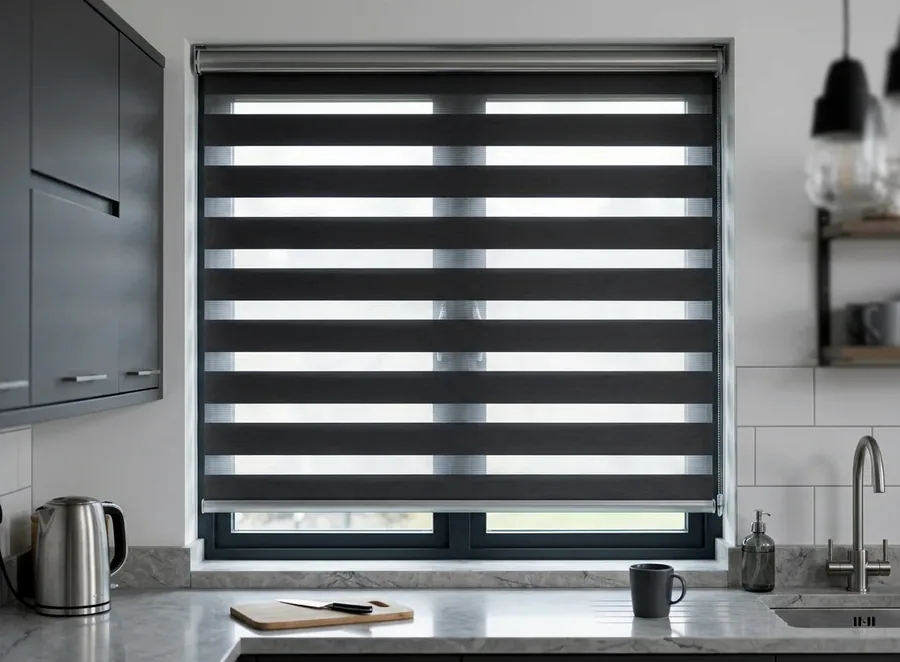
One Blind, Two Moods
Zebra fabric runs sheer and solid bands in a continuous loop. Slide the bands into alignment and light filters through evenly with a sense of privacy; offset them and coverage moves toward near-solid. It's a genuinely useful trick on a stand like the ones common in Birdhaven, where a living room or study can end up looking straight across a narrow gap at a neighbour's window, a driveway, or a shared boundary wall — you can hold a room at "private but bright" for most of the day and only go fully closed when you actually want to.
It's also become the default pick for open-plan living and dining spaces, where the look needs to read as considered rather than fussy, and for street-facing rooms in cluster and complex developments, where a uniform, tidy front is often part of the body corporate brief.
Honest Limitations
Zebra blinds are not a true blockout even fully offset — some light still seeps at the band edges, so a bedroom that needs real darkness is usually better served by a blockout roller or a layered combination. The sheer bands are also more delicate than a solid fabric, worth bearing in mind at reach height around pets and small children. And the fabric is moisture-sensitive, so we'd steer a steamy bathroom toward an aluminium venetian instead — ask us about that option when you enquire.
Fit & Control
Zebra blinds run on standard roller hardware — chain control with a child-safe tensioner, or motorised for taller openings and rooms you'd rather not reach into daily. Cassette options hide the headrail, and either inside or outside mount works depending on your recess depth, which your consultant will check at the free measure.